
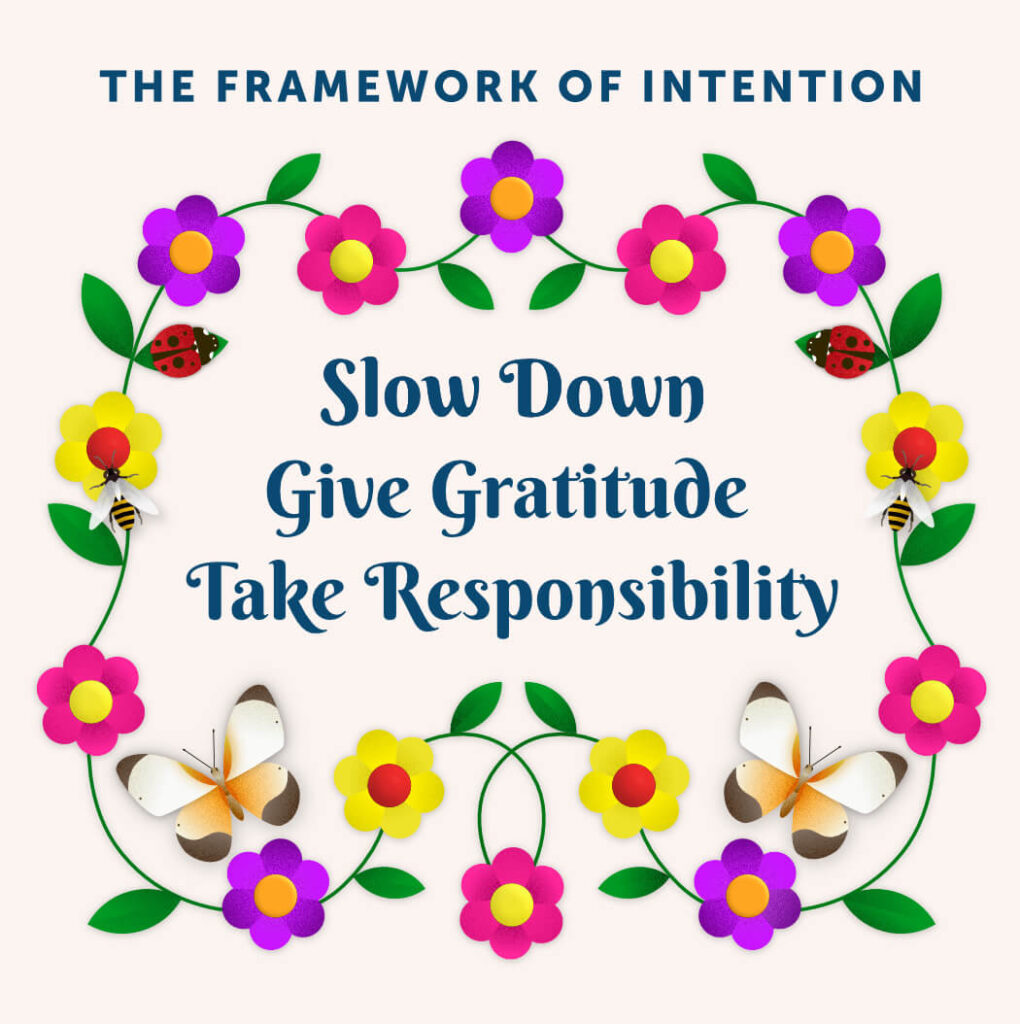
Designed by us – Chinemelum and Chuba Ezekwesili of Akanka Design Studio – The Framework of Intention (Slow Down, Give Gratitude, and Take Responsibility) is a nature-inspired, science-backed approach to living with intention.
It has been shared globally as a tool for cultivating a growth mindset, strengthening leadership, building emotional intelligence, supporting mental health, and unlocking productivity and creativity.
But how did this Framework come to be? To answer that, we need to step back into our story.
Early 90s 👶🏾👶🏾
Since we were babies, we were drawn to Nature. The first object we stood up and walked to as babies were our father’s plants. As babies do, we plucked the leaves, and were predictably scolded by our father.
Also, our father enjoyed watching Animal Planet and National Geographic and we would soon develop a passion for viewing Nature as well. We also begun drawing pictures of Nature (flowers, caterpillars, birds and other creatures) as babies.
Our love for Nature would continue into primary school where we created a small farm at the back of our home. At our small farm, we planted different crops just to watch how they grew. We ended up cultivating corn, beans, coco yam, groundnut, tomatoes, and pepper.
As we grew and went off to boarding school, university, and then work, we felt distanced from Nature and yearned to reconnect.
2020s 🌺🌺
The opportunity to do so came when we moved into a new home studio and decided we would transform our concrete walkway of our new space into a botanical garden.
Three months later, the COVID-19 lockdown struck in Nigeria. The timing was perfect as it gave us a chance to spend every day of the COVID lockdown landscaping and gardening until we transformed our concrete walkway into a blossoming garden.
During this experience of constant gardening, we learned profound lessons from Nature that would change our lives, relationships, and business. Gardening taught us the answer to our latest quest to design mindset. It taught us a powerful framework with three steps for designing mindsets.
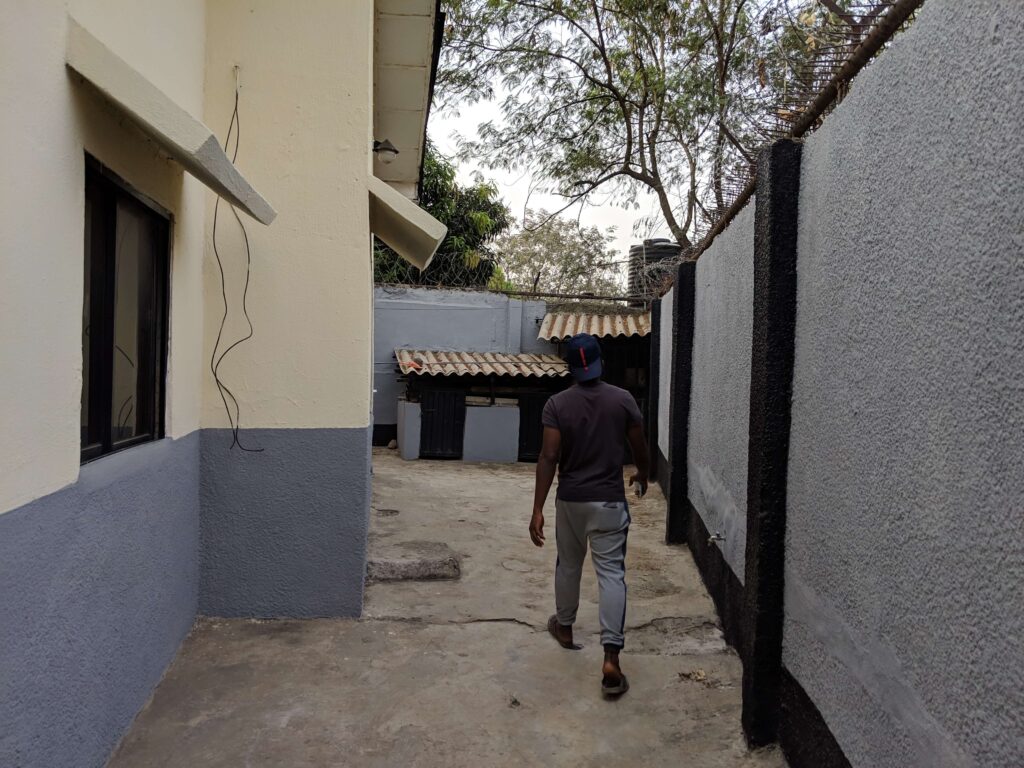
Before: 2020
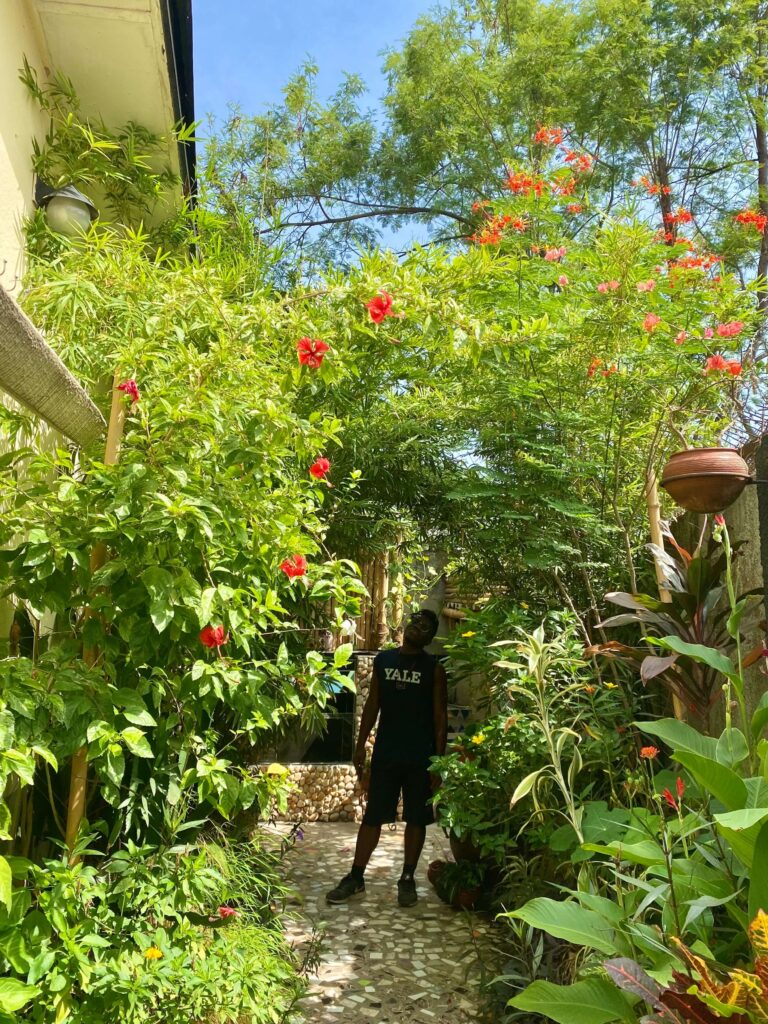
After: 2021
Slow Down 🧘🏾♂️

The first lesson we learned from Nature was to slow down. As we gardened, we watched our plants grow consistently at a natural pace. This gradual growth process brought to our mind the quote by the Chinese philosopher Lao Tzu that “Nature does not hurry, yet everything is accomplished.” We also had to take our time as we gardened. These observations taught us to slow down and be more present.
The more we pondered on the benefits of slowing down, the more we could see how essential it was to designing an intentional growth mindset. Slowing down to reflect on our intentions and priorities brought clarity and helped us frame the vision of what sought to see. This helped us make more intentional decisions across life. Whether we were communicating, collaborating, creating, or learning, we could see how slowing down helped us engage mindfully, intentionally, and productively, which increased our performance.
These effects of slowing down also scaled to the work environment. When we looked out for research on the effect of slowing down on individual and team performance, we found evidence confirming that mindfulness practices enhanced employee well-being, improved decision-making, and contributed to leadership effectiveness.
slow down
What are the things I can do to slow down more?
The essence of slowing down is to be present enough to see your path to peace, joy, and happiness. You can achieve this by consistently repeating these habits:
- Praying
- Meditating
- Gardening and spending more time in Nature
- Take deep breaths
- Get adequate sleep
- Exercising (running, yoga, martial arts, etc)
- Journaling and reflecting
- Clarify your intentions for the day
- Monitor and track what you spend your time doing in a day
- Spend time with your family and loved ones and be present
- Engage in moments of mindfulness (mindful eating, mindful walking)
- Listen with an intention to understand and learn and not just respond
- Prune your relationships and focus on those that you can add value and will bring value
- Cut down the amount of time you spend consuming content on social media or TV
- Track your feelings through the day and the thoughts and events that trigger those feelings
- Say “no” more to distractions or requests that don’t align with your goals. Filter by asking “Will this get me closer to my goal?”
Give Gratitude 🙏🏾

The second lesson we learned from Nature was to give gratitude. As we gardened, we noticed that plants made use of what was available to them. The soil, water, and sun were all materials they made use of.
We also observed that everyday came with new growth, no matter how little. This was a reminder that there is always something to be grateful for. This reminder also gave us the zeal to keep improving the garden.
We observed that when we focused on what we were grateful for, we found the strengths, resources, and assets needed to progress. When we gave gratitude for what inspired us, we learnt to connect the dots faster, and build our creative confidence and innovative thinking.
Our ability to communicate better with each other was also enhanced by the act of starting with gratitude. When we learnt to give gratitude, we became more resilient and better prepared for unpredictable events that took place because we focused first on the positive. Giving gratitude was empowering.
These effects of giving gratitude also scaled to the work environment. When they researched the impact of expressing gratitude on team performance, they found that it proactively strengthens interpersonal bonds and increases employee motivation to work harder.
give gratitude
What are the things I can do to give gratitude more?
The essence of giving gratitude is so you appreciate your path to love, peace, joy, and happiness
- Keep a gratitude journal
- Write and say affirmations
- Write your strengths down
- Look out for the good in others
- Recall and write down your wins
- Verbally express thanks to others
- Start with gratitude when giving feedback
- Measure your progress – and celebrate them
- Visualize the positive future you want to see
- Genuinely compliment something about others
- Reframe self-deprecating harmful thoughts into self-affirming thoughts
- Reflect on the people and resources around you who can help
- Listen intently with the goal to understand and learn and not just respond
- Even when things don’t go right, ask yourself “What is the lesson here? Can I turn it into a blessing?”
- Gratitude challenge: find something to be grateful for – especially when there doesn’t seem to be anything.
Take Responsibility 💪🏾

The third lesson from Nature was to take responsibility.
Creating the garden required consistent daily actions. We learnt the importance of taking responsibility as we had to ensure the plants consistently received sufficient water, good soil, and adequate sunlight.
As we took care of our plants, we watched them take responsibility for growing everyday.
As we became more intentional about taking responsibility in their daily lives, we experienced a greater sense of control over their lives, making us feel more empowered and capable of effecting change. It also helped us avoid the negative emotions associated with blaming others or feeling guilty, leading to a more positive and constructive mindset.
These effects of taking responsibility also scaled to the work environment. When we researched the effect of taking responsibility on individual and team performance, we found that teams with members who took responsibility for their contributions and actions demonstrated higher levels of collaboration, efficiency, and overall team success. Likewise, leaders who embraced and promoted a culture of taking responsibility within their teams saw improvements in productivity and overall organizational success.
take responsibility
What are the things I can do to take responsibility more?
The essence of taking responsibility is so you walk your path to love, peace, joy, and happiness
- Experience new things
- Engage in acts of kindness
- Keep your promises and be reliable
- Create (paint, draw, sketch, crotchet)
- Take on tasks that challenge you to grow
- Accept your situation and be open to improving it
- Break Up Your Tasks Into Smaller More Manageable Steps
- Be comfortable with apologizing when you’re in the wrong
- Take responsibility for your thoughts, feelings, words, and actions
- Quell the urge to blame others by asking “What is my role in this?”
- Be open to feedback (Try processing feedback through the framework helps)
- Refuse to take things personally. Ask yourself, “Is this about me, or the issue at hand?”
- Stop making excuses and practice taking responsibility by saying “I take responsibility for…”
- Defeat the habit of complaining by asking “What is the lesson here? What can I learn from this?”
- Take responsibility for your physical health (eat healthy, sleep properly, exercise regularly)
Combining the Steps ♻️
Each of these lessons from Nature was evidently powerful, but what we observed was that the applied combination of these three steps always led to a more intentional transformation.
We were able to transform the concrete space to a growing garden because we had practiced these three steps together. We had slowed down to set an intention for the space. We had given gratitude for the space and its potential to become a garden. And finally, we had taken responsibility to begin landscaping and transforming the space into a garden.
By using these three steps, we had created something new in a sustainable, innovative, and natural manner. We decided to call these three steps “The Framework of Intention” or “The Framework” for short.
The Mission
After we confirmed the effectiveness of the Framework with ourselves and our family, we decided to shared the Framework publicly and received positive feedback from others who applied it to their lives in new ways.
Since then, we have made it our mission to share the Framework with individuals, families, communities, organizations, and nations looking to design more intentional mindsets and cultures.
The Framework has been taught at institutions such as Yale University, the School of Politics, Policy, and Governance (SPPG), and more.
If you would like to support our mission to make the world more intentional, you can:
1 Comment
-
Reading through this post reminded me of how beautiful and eye opening the class was when you both took us last year November in SPPG.